Direct and indirect heat are not competing grill religions. They are two ways to place food in relation to the heat source. Direct heat puts food above the flame or coals for fast browning. Indirect heat places food beside the source so the lid and circulating hot air can cook it more gradually. Most useful grill sessions use both, because the outside and centre of food often need different rates of cooking.
What direct heat changes
Direct heat is strongest at the grate above the fuel. It is useful for thin steaks, burgers, skewers, quick-cooking vegetables, sliced fruit, and the final surface of thicker foods. The surface receives energy quickly, so browning and charring happen before much time passes. That speed is useful when the food is thin enough for the centre to cook during the same window.
Direct heat is less forgiving when food is thick, fatty, sugary, or easily torn. A fat drip can create a flare-up. A sweet glaze can burn. A delicate fillet can stick before it has formed a crust. The answer is not to avoid direct heat forever; it is to limit the exposure and keep an escape route.
What indirect heat changes
Indirect heat places food away from the fuel. With the lid closed, hot air circulates around the food like a small outdoor oven. The surface develops more slowly, while the centre has time to warm. Indirect heat suits chicken pieces, ribs, roasts, thick vegetables, large fish, and any food that needs time after browning.
Indirect heat does not mean no heat. A grill with a weak or poorly arranged fire will not cook efficiently just because the food is away from the coals. The chamber needs a stable range, the lid needs to close, and the food needs room for air to move. Use a grate-level thermometer when possible because the lid display may be far from the food.
Build the two-zone layout
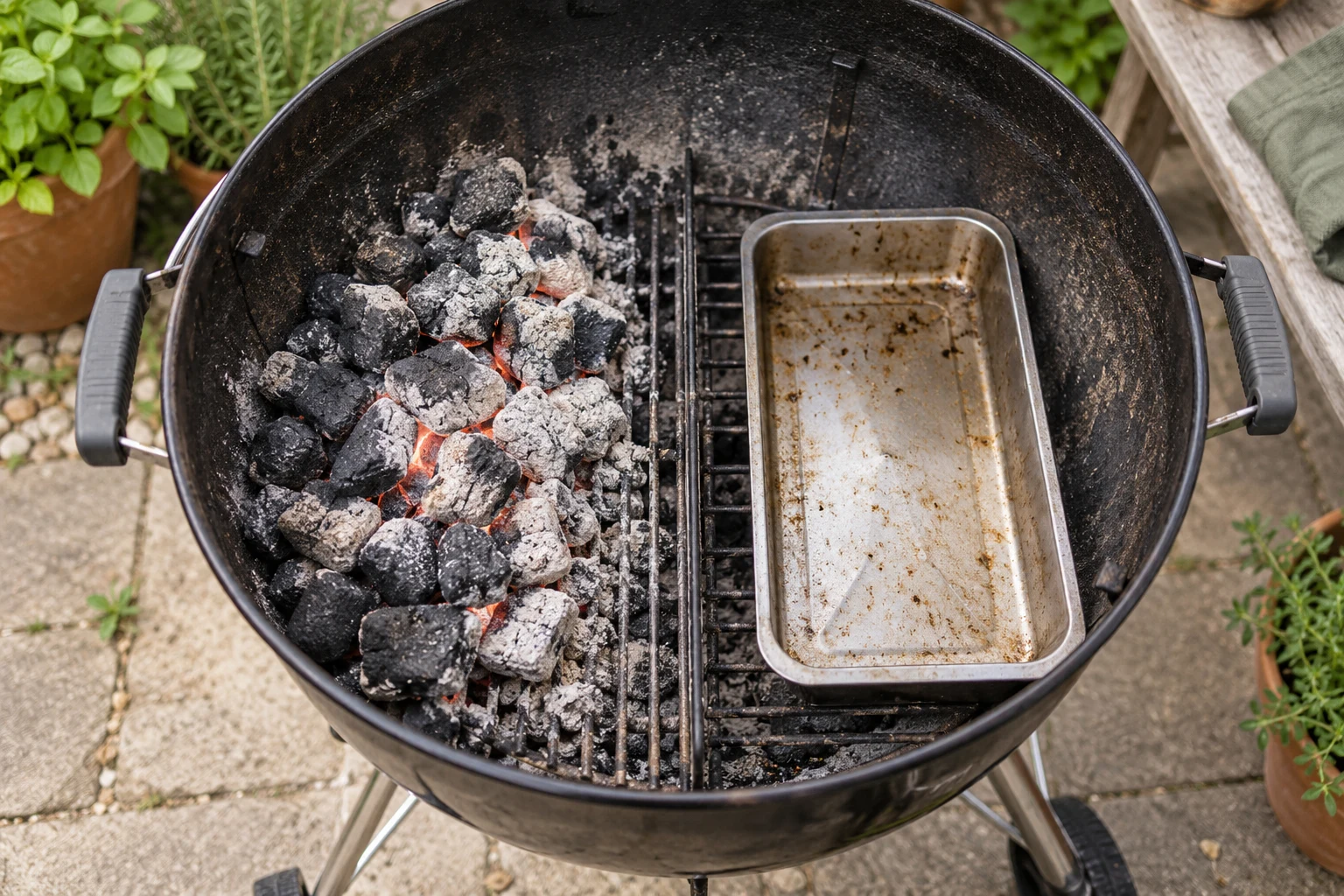
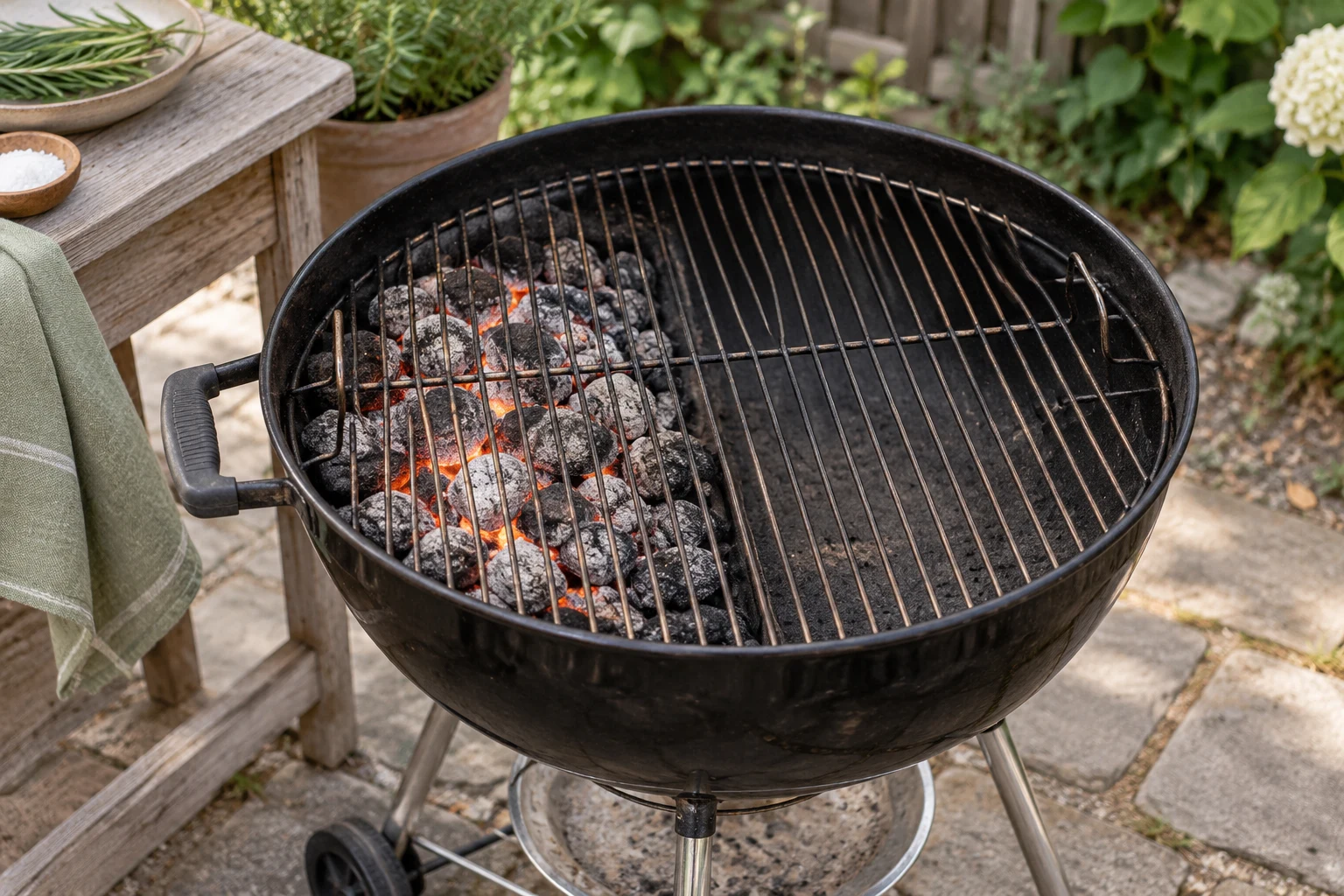
On a gas grill, light one side and leave another burner off or lower. On charcoal, bank the coals to one side. Keep the direct zone hot enough for browning and the indirect zone clear enough for finishing. A drip pan can reduce mess, but it should not block necessary airflow or sit where grease can ignite.
Before food goes on, decide where it will start and where it can move. Put a thick piece over indirect heat if the outside is already dark, or start it over direct heat for a short sear and then move it away. Keep tongs and a clean platter ready. A two-zone fire is useful only if the cook actually uses the zones deliberately.
Use transitions instead of fixed rules
Reverse-searing starts a thick cut over indirect heat and finishes it briefly over direct heat. Searing first and finishing away from the fire follows the opposite order. Neither is automatically correct. Choose based on the thickness, the surface you want, the heat available, and how much control you need.
For chicken, indirect heat can cook the thick portion while direct heat finishes the skin. For ribs, indirect heat does most of the work while a short direct or hotter finish sets sauce. For vegetables, dense pieces can begin away from the fire and move closer when tender enough to colour. The technique is a sequence of heat decisions, not a label that replaces observation.
Read the food as it moves
Watch the surface, thickness, and flare-ups. If the outside browns too quickly, move the food away from the heat and close the lid. If the centre is ready but the surface is pale, give it a short direct finish. If the food sticks, wait for the surface to set before forcing it. If sugar or fat catches fire, move to the cooler zone and control the fuel rather than repeatedly turning the food through flames.
Use a thermometer for the safety decision. FoodSafety.gov and USDA FSIS guidance should determine safe internal temperatures for the specific food, especially poultry and ground meat. Direct or indirect placement does not make unsafe handling safe. Keep raw and cooked tools separate and use a clean serving platter.
Understand common mistakes
Putting everything over direct heat is the most common mistake. It creates a fast surface and leaves the cook with no place to move food. The opposite mistake is putting everything over indirect heat and expecting a strong crust without a finishing phase. Another mistake is opening the lid every time the temperature moves slightly. Heat management needs a measured adjustment and time to respond.
Crowding is also a layout mistake. Food releases moisture, blocks airflow, and makes a flare-up harder to avoid when the grate is full. Cook in waves if needed. A smaller menu cooked under control is better than a large menu that forces every ingredient into the hottest square of metal.
Practise one contrast
On the next cook, choose one food and compare the zones. Put a small portion over direct heat and another over indirect heat, keeping the thickness similar. Observe browning, texture, time, and the amount of turning required. Do not change fuel, seasoning, lid position, and portion size all at once. The point is to learn what heat placement changes on your grill.
Once the distinction becomes familiar, the grill feels less mysterious. Direct heat gives speed and colour. Indirect heat gives time and protection. The best cooks move between them with a reason, using the cooler area as a control rather than waiting for the fire to force a decision.
Sources
- FoodSafety.gov Safe Minimum Internal Temperatures: https://www.foodsafety.gov/food-safety-charts/safe-minimum-internal-temperatures
- USDA FSIS Safe Temperature Chart: https://www.fsis.usda.gov/food-safety/safe-food-handling-and-preparation/food-safety-basics/safe-temperature-chart
- FoodSafety.gov How to Grill Safely: https://www.foodsafety.gov/blog/how-grill-safely-summer