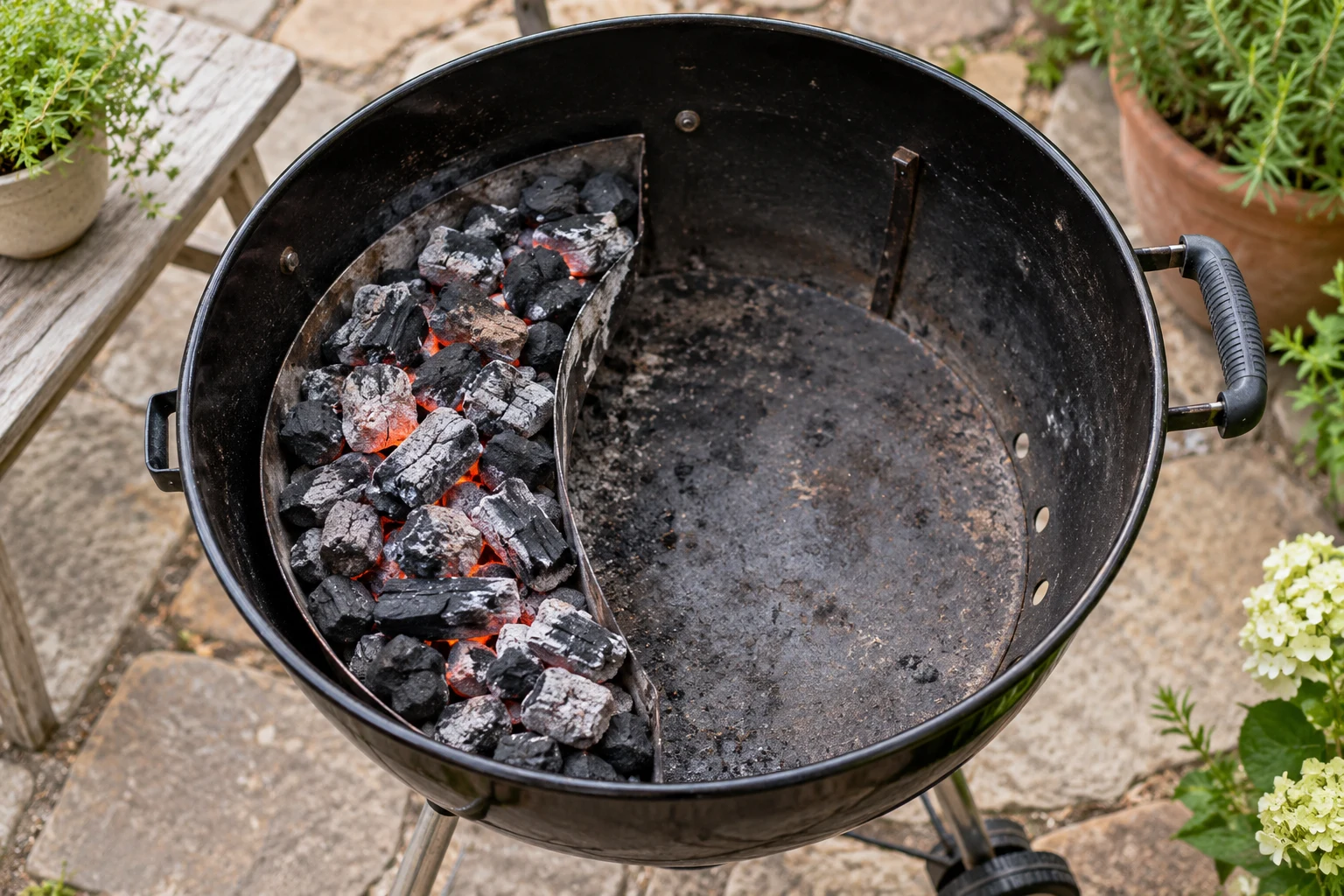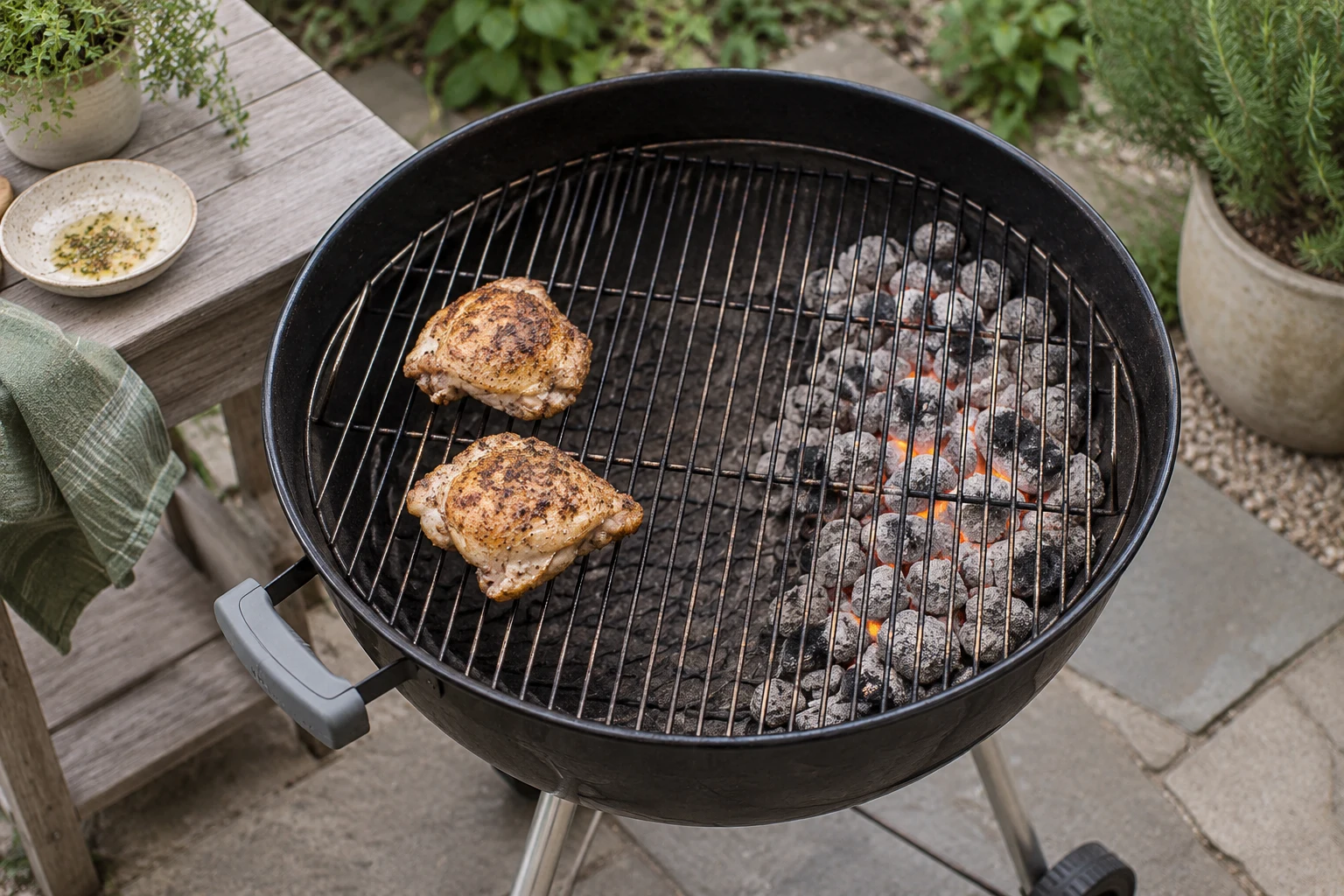
A two-zone fire gives the cook two different rates of cooking on one grill. One side has direct heat above the fuel. The other side has no fuel directly underneath and works as an indirect, finishing, or emergency area. The value is not the label. The value is having somewhere to move food when the surface and centre no longer need the same amount of heat.
Decide what the zones must do
Before lighting the grill, decide which foods need direct browning and which need time. Thin burgers, steaks, skewers, and vegetables may start over direct heat. Thick chicken, roasts, ribs, and large fish may need indirect heat. Fatty or sugary food needs an escape route when a flare-up begins. If the menu has only one thin food, a two-zone layout is still useful for holding and recovery.
The zones do not need to be equal. A small direct area and a broad indirect area suits a long cook. A larger direct area may suit a quick meal with several burgers. Leave room between the zones so the cook can move food without putting a hand over the hottest surface.
Build the layout
On a gas grill, light one side and leave the other burner off or lower. On charcoal, bank the coals to one side and leave the other side clear. For a long cook, a drip pan can sit in the indirect area if it does not block airflow. Keep the lid able to close fully, because the indirect zone relies on circulating hot air.
Preheat before food arrives and clean the grate. Check the heat at grate level rather than assuming the lid display describes both sides equally. Gas grills may have hot spots near burners; charcoal may be hotter near the centre of the pile. Learn the pattern with a short test or by observing the first cook.
Use direct heat for the surface
Direct heat is a tool for colour, crust, and quick cooking. Put dry, lightly oiled food on the grate and allow the surface to set before turning. Crowding creates steam and makes a flare-up harder to control. If food sticks, it may need more time before it releases, not more force.
Do not leave thick food over direct heat simply because it needs more browning. When the outside is ready, move it to indirect heat and close the lid. This lets the centre continue without forcing the surface into smoke and flame.
Use indirect heat for time
The indirect side is an active cooking zone, not a place where food waits cold. With the lid closed, hot air circulates around the food. Rotate or reposition once if the cooker has an uneven pattern, but avoid opening the lid constantly. A grate-level thermometer helps show whether the indirect area is holding the intended range.
If the indirect zone is too cool, check fuel, airflow, burner output, lid sealing, and wind before moving the food back over direct heat. If it is too hot, reduce the heat source or move the food farther away. A modest adjustment followed by observation is more reliable than repeated large changes.
Move food with a reason
Move a burger away from a flare-up. Move chicken to indirect heat after the skin has browned. Move vegetables closer to direct heat when they are tender but pale. Move a steak back briefly for a final sear if the surface needs colour. Each move should answer a specific problem: surface ahead of centre, centre ahead of surface, or fire too active.
Keep tongs clean and use a separate platter for finished food. Do not move cooked food back to a tray that held raw meat. When using a thermometer, check the thickest part without touching the grate. Follow current FoodSafety.gov and USDA FSIS guidance for the food being cooked.
Handle flare-ups safely
Fat dripping over direct heat can create a short flame. A controlled two-zone fire lets you slide the food away while the fire settles. Close the lid if the grill design and fuel make that safe, and reduce or shut off the heat according to the equipment instructions. Never pour water onto burning grease.
Keep children and guests outside the working boundary. Use the grill outdoors, maintain clearance from structures and combustible materials, and account for wind. The cooler zone is useful for food, but it is not a reason to ignore an unsafe fire.
Practise with one food
Try the setup with a thick chicken piece, a burger, or a vegetable that can tolerate both zones. Note how long the surface needs over direct heat, how quickly the indirect area finishes the centre, and how often the lid must open. Avoid changing fuel, thickness, seasoning, and zone size at the same time.
If the food burns, reduce direct exposure or move earlier. If it stays pale, allow more direct contact after the centre is ready. If the grill loses heat, reduce lid openings and improve fuel management. The record will tell you whether the zone ratio or the cooking sequence needs to change.
When several foods share the grill, assign each one a zone before cooking begins. This prevents the direct side from becoming a queue of unrelated ingredients and gives the cook a clear order for moving food. Planning the route is what turns two areas of metal into an actual control system.
Sources
- FoodSafety.gov Safe Minimum Internal Temperatures: https://www.foodsafety.gov/food-safety-charts/safe-minimum-internal-temperatures
- USDA FSIS Safe Temperature Chart: https://www.fsis.usda.gov/food-safety/safe-food-handling-and-preparation/food-safety-basics/safe-temperature-chart
- NFPA Grilling Safety: https://www.nfpa.org/education-and-research/home-fire-safety/grilling