Juicy grilled chicken comes from managing thickness, heat, and timing together. A marinade cannot rescue a breast that is too thick for direct heat, and a dark surface does not prove the centre is safe. The reliable method is to create even pieces, use direct and indirect zones, check the thickest part, and remove the chicken when it has reached a safe temperature rather than leaving it over the fire for a memorised number of minutes.
Choose and prepare the pieces
Chicken breasts, thighs, wings, and drumsticks have different shapes and fat levels. Breast meat is lean and thick, so it benefits from even thickness, indirect finishing, or a protected cooking method. Thighs and drumsticks tolerate longer heat but still need a safe internal temperature. Wings have a large surface area and can brown before the joints are ready.
Trim loose skin and fat that will burn, but do not strip away every protective layer. If a breast is very thick, flatten it carefully or choose pieces of similar thickness. Even pieces finish closer together and reduce the temptation to leave a thin piece over the fire while waiting for a thick one.
Pat the chicken dry before seasoning. A wet surface steams and delays browning. Use a light coating of oil and apply sugar-heavy sauces late. If using a marinade, keep a clean portion separate for serving. Treat the used marinade and every raw-chicken utensil as contaminated until safely washed or cooked.
Build two heat zones
Preheat and clean the grill, then create a direct side and an indirect side. Direct heat can brown the surface; indirect heat can cook the centre without burning the outside. Put thick pieces or pieces with skin over indirect heat when the surface is developing too quickly. Keep a cooler route open for flare-ups caused by fat.
On a gas grill, leave a burner off or lower. On charcoal, bank fuel to one side. Use a grate-level thermometer where possible because the lid display may not describe the cooking zone. Do not crowd the grate. Space improves airflow and lets the cook move one piece without disturbing the rest.
Cook the surface deliberately
Place chicken over the chosen zone and leave it long enough for the surface to set. Turning too early can tear the skin or leave the meat stuck. When the food releases, turn it once and move it if the outside is ahead of the centre. Keep the lid closed when the grill needs chamber heat, but open it for actual checks rather than constant reassurance.
Apply sauce late. A sugary glaze can burn before the chicken is safe. Brush a thin layer near the end and move the chicken to moderate or indirect heat so the sauce can set. If a flame rises, move the chicken away and control the fire according to the equipment instructions. Never pour water onto burning grease.
Check the thickest point
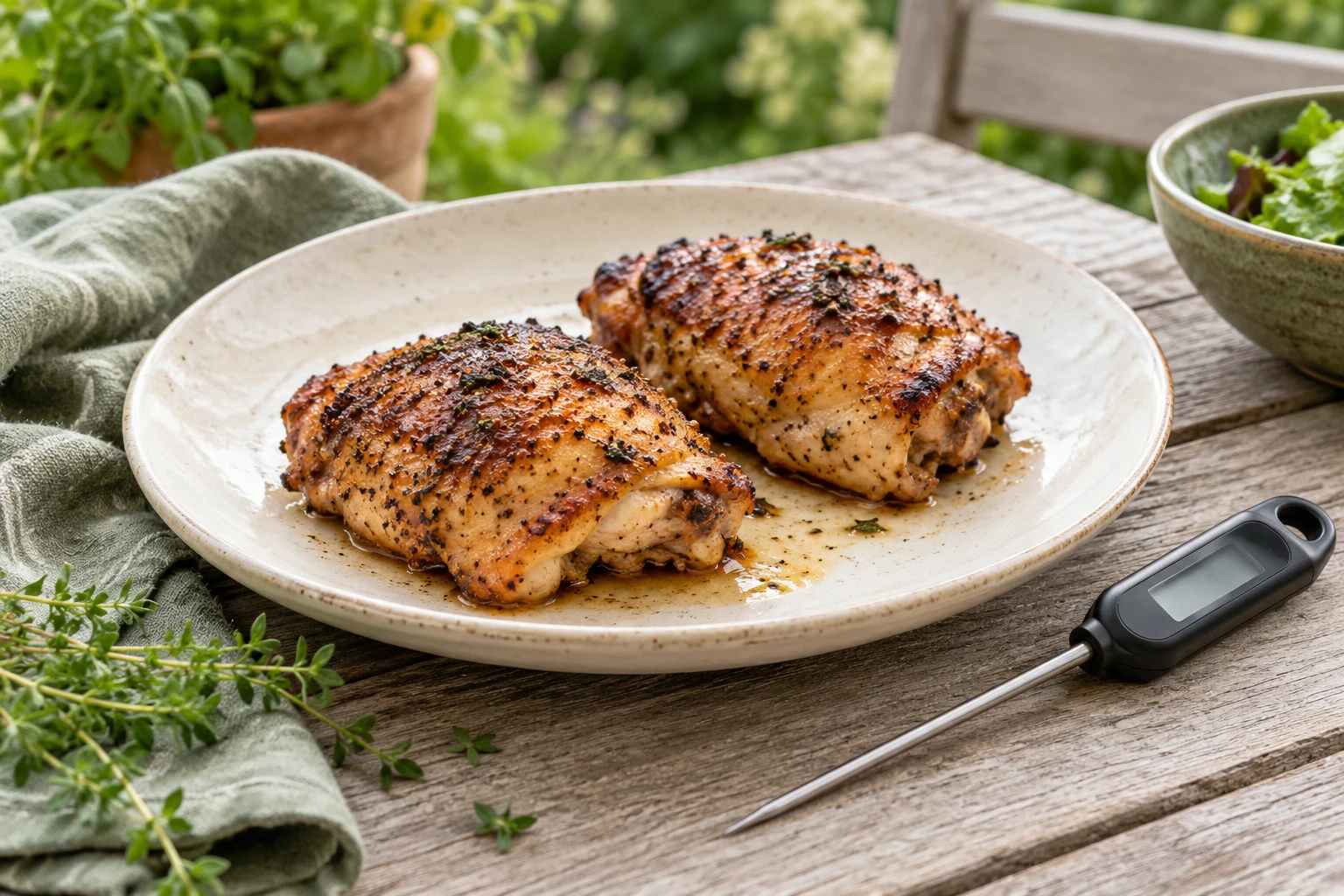
Use a food thermometer at the thickest part of the largest piece, approaching from the side when that gives a better reading. Follow current FoodSafety.gov and USDA FSIS guidance for poultry. Do not touch bone or the grate with the probe. Colour, clear juices, and grill marks are useful observations but cannot replace a temperature check.
When one piece is ready before another, remove it to a clean platter and continue cooking the rest. Do not place cooked chicken back on the raw tray. Resting can help texture, but it is not a substitute for reaching the safe temperature first.
Fix dryness and uneven cooking
Dry breast meat often results from excessive direct heat, uneven thickness, overcooking while waiting for another piece, or repeated turning and pressing. Flatten thick pieces, cook more of the time over indirect heat, and check earlier. If the surface burns, reduce the sugar, move away from direct heat, or lower the fire. If the chicken is pale, improve drying, preheat, and final direct contact after the centre is nearly ready.
Skin that remains rubbery may need more surface drying and a controlled finish. Chicken that flares repeatedly may have too much fat over the direct zone or a grate with accumulated grease. Clean the grill and keep a cooler area ready rather than trying to overpower the flame.
Serve and store safely
Prepare sides and sauces before the chicken reaches the finishing stage. Use a clean knife and board for slicing. Serve smaller portions and replenish rather than leaving all the chicken in the heat. Move leftovers into safe storage according to current official guidance and do not let a platter remain outdoors for the entire gathering.
Record the piece type, thickness, zone, cooking sequence, thermometer reading, and rest. The next cook should change one factor. Chicken becomes reliable when the cook stops asking the grill to make uneven pieces finish together and instead uses shape, zones, and temperature as a single plan.
If several guests prefer different pieces, cook the thickest and slowest pieces first, then use the direct zone for a short finish. This keeps the fire from forcing thin pieces to wait over heat. A small schedule written beside the grill can prevent the common mistake of leaving the first finished chicken on the grate while the last piece catches up.
Sources
- FoodSafety.gov Safe Minimum Internal Temperatures: https://www.foodsafety.gov/food-safety-charts/safe-minimum-internal-temperatures
- USDA FSIS Safe Temperature Chart: https://www.fsis.usda.gov/food-safety/safe-food-handling-and-preparation/food-safety-basics/safe-temperature-chart
- FoodSafety.gov How to Grill Safely: https://www.foodsafety.gov/blog/how-grill-safely-summer