Fish is not difficult because it needs a complicated marinade. It is difficult because the fillet is delicate, the surface holds moisture, and the moment it touches a hot grate it starts to bond with any residue that was left behind. The reliable method is therefore a sequence: choose a fish that can tolerate the grill, prepare a clean and properly heated grate, dry and lightly oil the surface, place it with a plan, and wait for the fish to release before moving it.
Choose the fish for the equipment
Firm fish gives a beginner more room to learn. Thick salmon portions, halibut, swordfish, tuna, snapper fillets with skin, and whole small fish can be grilled directly when the grate is clean and the heat is controlled. Very thin fillets and fish that flakes easily are better protected by a basket, a plank, foil with ventilation holes, or a cast-iron plancha. That is not a failure of technique. It is a sensible match between food structure and cooking surface.
Skin-on portions also offer a useful visual cue. The skin can act as a small protective layer while the flesh firms. Pat it dry before seasoning. If the fish is wet from packaging or a marinade, the surface will steam before it sears, and the delayed crust makes sticking more likely.
Prepare the grate before the fish arrives
Start with a grate that has no loose pieces of yesterday's food. Brush it while it is cold enough to work safely, then preheat the grill so the cooking surface is hot before the fish is placed. A hot grate does not guarantee success, but it gives the surface a chance to set quickly instead of slowly bonding to cold metal.
Create one direct-heat area and one cooler area. Direct heat is useful for setting the surface; the cooler area gives you a place to finish a thick portion if the outside is ready before the centre. Do not build a fire so large that flames are constantly touching the fish. Flare-ups create burnt spots and tempt the cook to move the fish too early.
Lightly oil the fish, not a pool of oil on the grate. Excess oil drips onto the fire, creates smoke and flame, and does not solve a dirty surface. If you use a plank or basket, follow that tool's preparation instructions and keep the same separation between raw fish and ready-to-eat food.
Place it once and watch the right signals
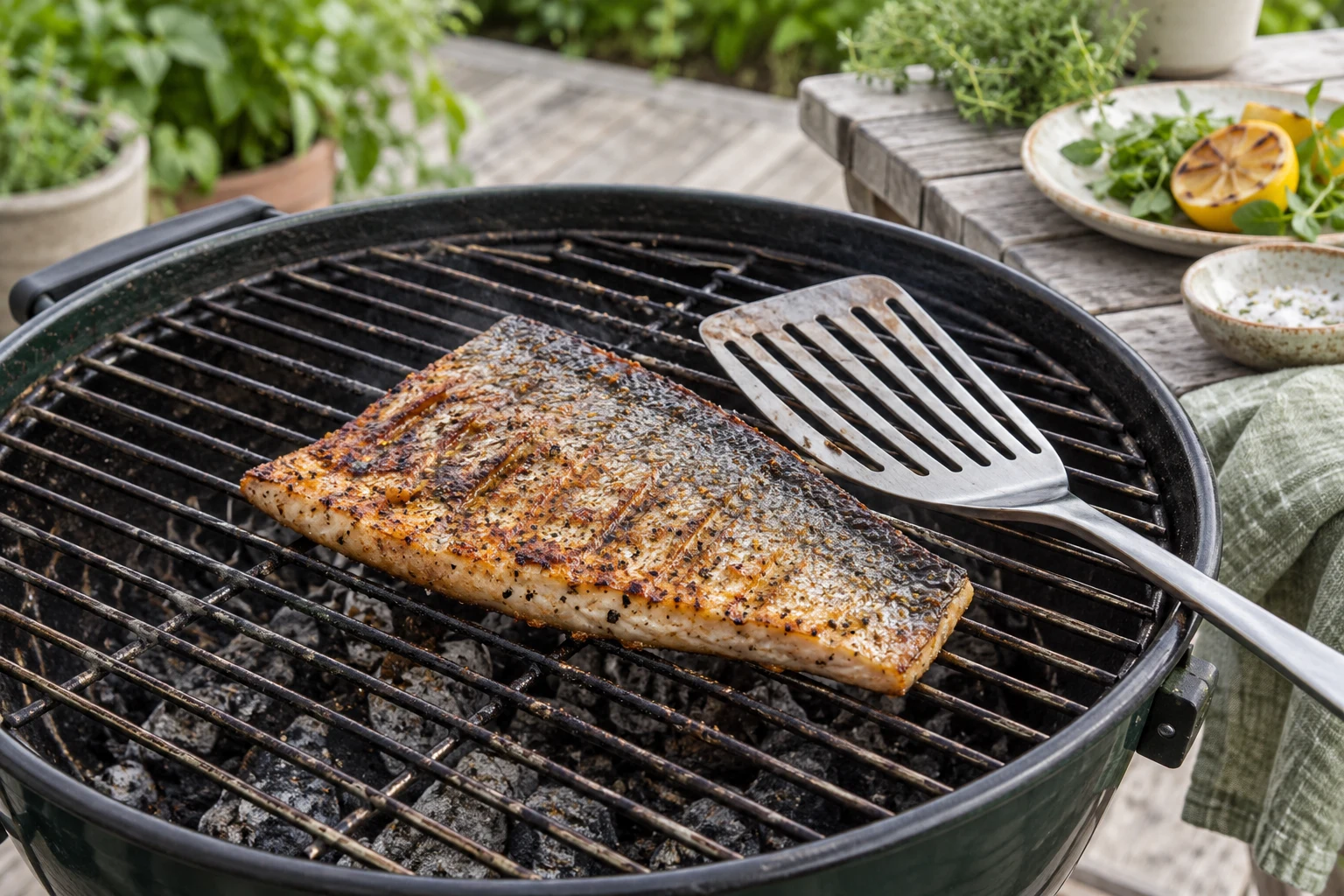
Put the fish down with the presentation side facing the grate. Then leave it alone. A fillet often resists when it is first placed because proteins are still attaching to the metal. As the surface cooks, the crust firms and the fish begins to release. A thin, flexible turner can test the edge, but it should not be used to force the fish free. If the flesh tears, give it more time or move it to the cooler zone with the support of a basket or foil.
The visual cue is a change from translucent to opaque travelling up from the grate. The timing depends on thickness, starting temperature, wind, lid position, and heat. A clock can help you plan, but it cannot tell you whether this particular fillet is ready to turn. When the cooked band has moved most of the way through and the surface is firm, turn once if the fish can support it.
Use temperature for the safety decision
The surface can look browned while the thickest point remains undercooked. FoodSafety.gov lists 145°F as the safe minimum internal temperature for fish. Check the thickest portion with a food thermometer, inserting it from the side so the probe reaches the centre. For a thin fillet, use the most representative spot and avoid touching the grate, which can give a false reading.
Do not use the thermometer as a reason to keep opening the lid every few seconds. Open once when the fish is close, check quickly, and close the grill again if it needs more time. Keep the raw-fish plate and utensils separate from the plate used for serving. If you use a marinade, treat the used liquid as a raw-food contact material unless it has been handled and cooked according to a safe recipe.
Solve common failure modes
If the skin tears, the grate was probably not clean or hot enough, the fish was moved before release, or the spatula angle was too steep. If the outside burns before the centre cooks, the heat is too direct for the portion's thickness; move it to indirect heat and use the lid. If the fish tastes dry, the portion may have been too thin for the fire, cooked past the target, or exposed to repeated turning and lid opening.
When a fillet is extremely fragile, stop trying to prove that it can survive direct grilling. A basket or plank reduces handling and lets you focus on heat and doneness. The best tool is the one that protects the food while teaching a repeatable decision.
Serve without breaking the work
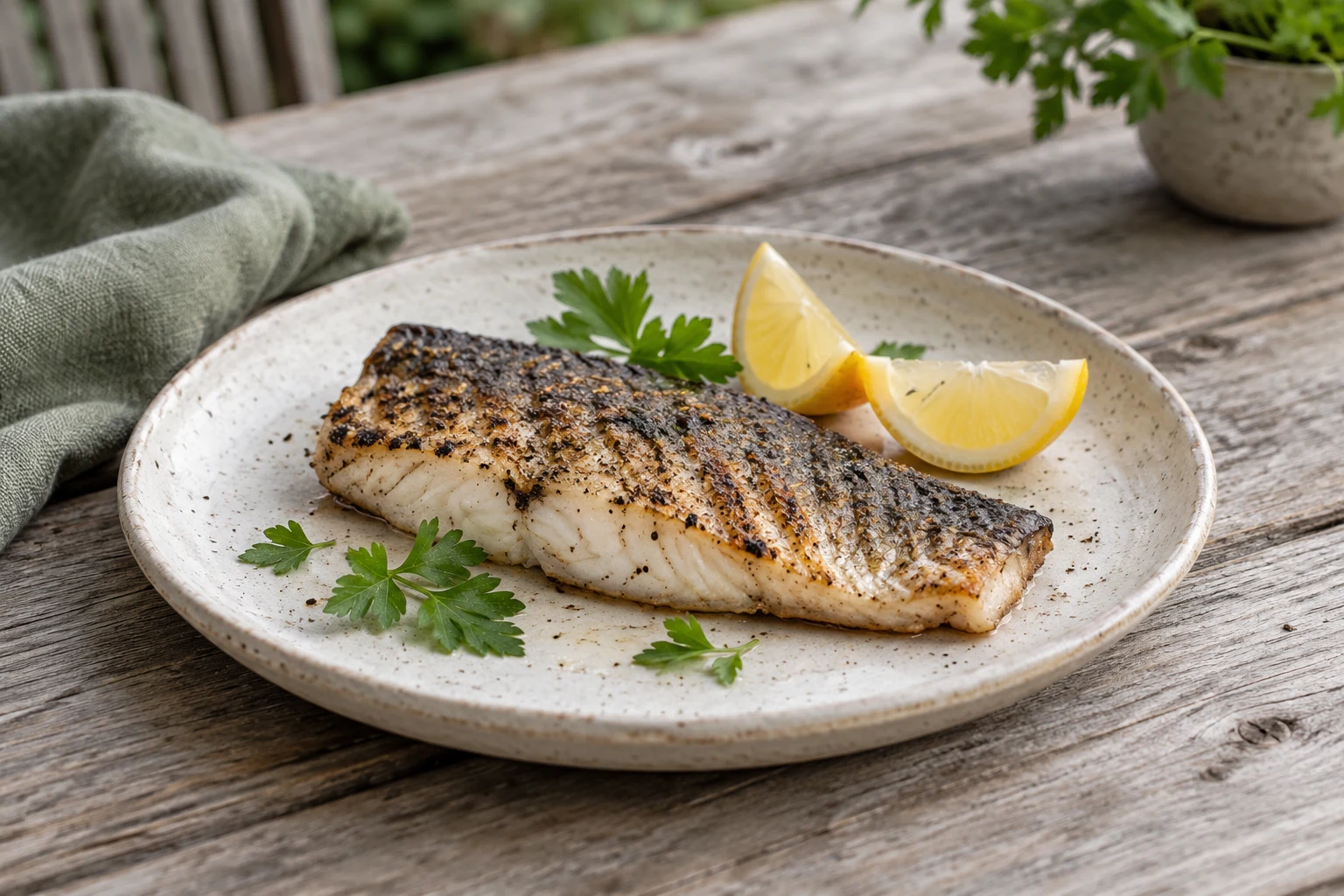
Have the serving plate, lemon, sauce, and sides ready before the fish reaches the target temperature. Slide the turner under the thickest supported part, not through the middle of a flaky section. Resting for a short period allows heat to settle while the surface remains pleasant; do not leave the fish in a hot pan where carryover heat can continue aggressively.
Record three facts after the cook: the fish thickness, the heat arrangement, and the point at which it released. Those notes are more useful than writing down an absolute number of minutes. On the next attempt, change only one variable. A clean grate, dry surface, controlled heat, one deliberate turn, and a thermometer are enough to make grilled fish a method rather than a gamble.
Sources
- FoodSafety.gov Safe Minimum Internal Temperatures: https://www.foodsafety.gov/food-safety-charts/safe-minimum-internal-temperatures
- USDA FSIS Safe Temperature Chart: https://www.fsis.usda.gov/food-safety/safe-food-handling-and-preparation/food-safety-basics/safe-temperature-chart
- FoodSafety.gov How to Grill Safely: https://www.foodsafety.gov/blog/how-grill-safely-summer