A BBQ rub is a surface seasoning system, not a secret powder that fixes every cut. Its job is to distribute salt, spice, aroma, and sometimes sweetness across the food so the grill or smoker can develop a useful crust. The best rub is the one that suits the food, heat, cooking time, and finishing sauce. A complicated ingredient list is less important than balance and timing.
Start with the job of the rub
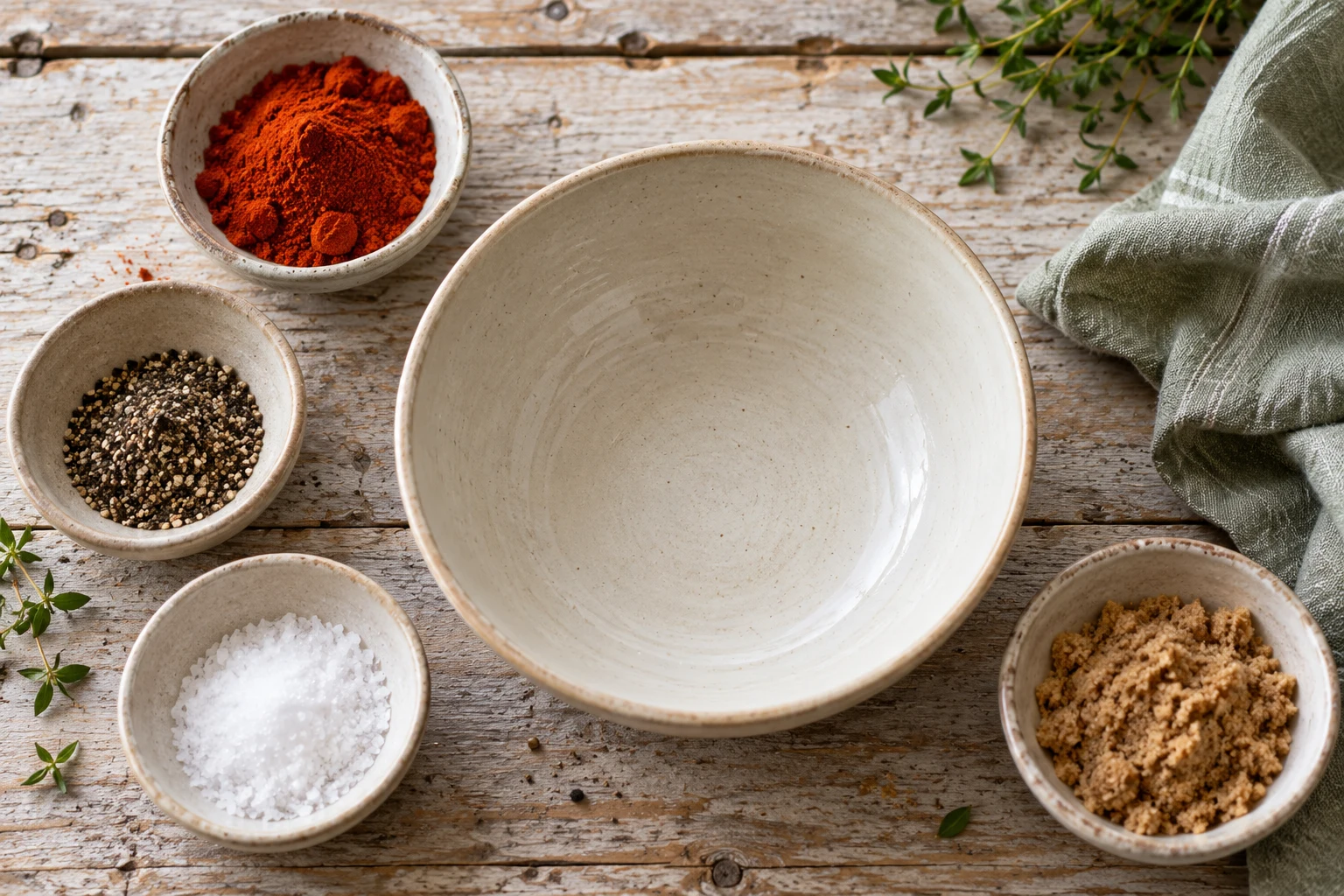
Salt seasons the food and helps the other flavours register. Pepper adds heat and aroma. Paprika contributes colour and a mild pepper note. Sugar adds sweetness and can help a crust brown, but it also burns more easily over direct heat. Dried herbs and spices add character, while mustard powder, garlic, or onion can support savoury depth.
Choose the proportions for the food. A rub for low-and-slow pork can contain more sugar than a rub for burgers cooked directly over coals. A rub for vegetables may need less salt because the pieces are thinner and may be finished with cheese, sauce, or a salty condiment. The flavour should remain adjustable at the table.
Mix and store it cleanly
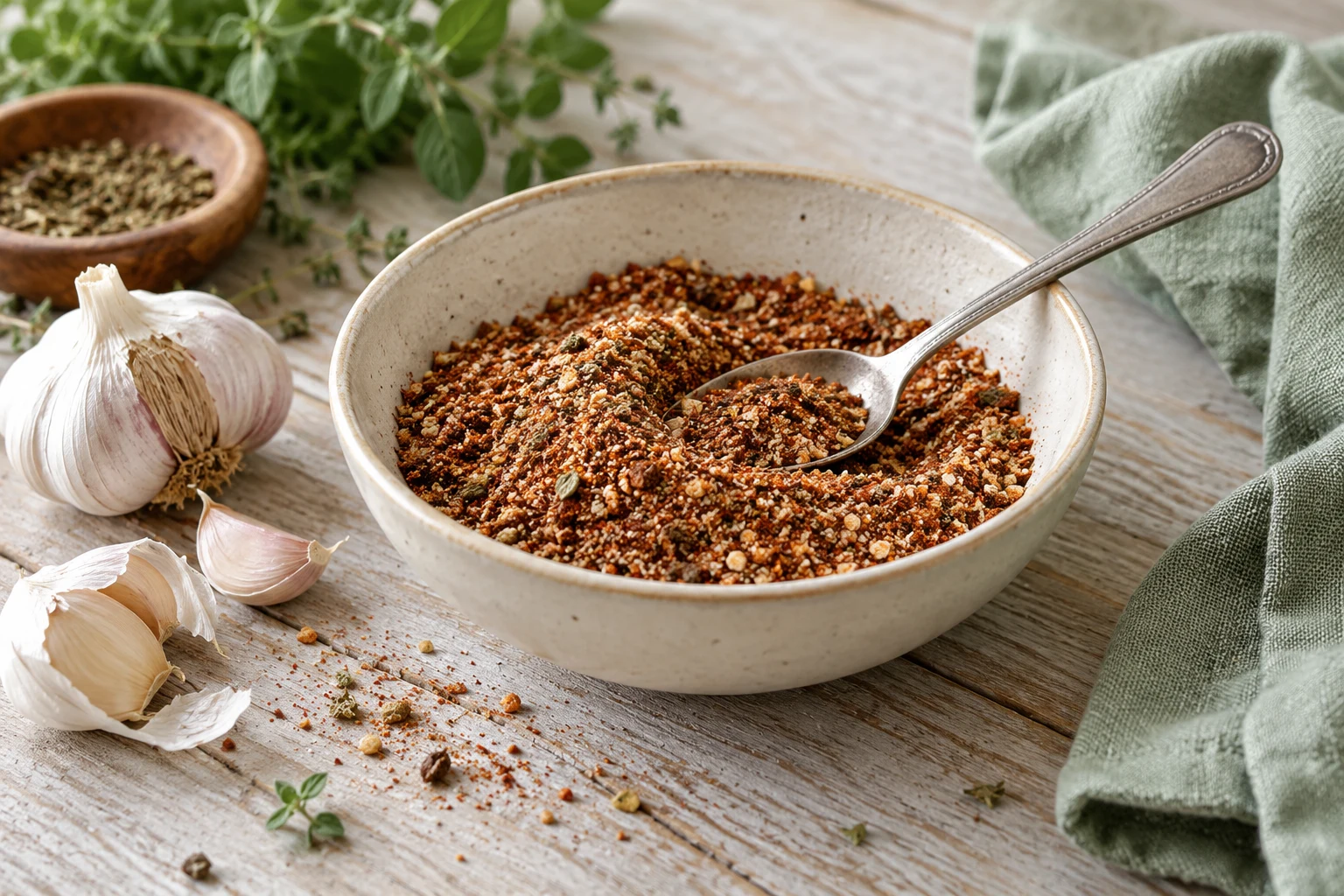
Use clean, dry measuring tools and a dry bowl. Break up clumps so the rub distributes evenly. Label the container with the ingredients and date, especially if the mix contains ground spices that will fade over time. Store it in a sealed container away from heat and moisture. Do not put a used spoon from raw meat back into the storage jar.
Make a small batch when learning. A smaller jar lets you test the balance without being stuck with a flavour that is too salty, too sweet, or too hot. Taste a pinch of the dry mixture for balance, but remember that cooking changes aroma and the food itself will dilute the seasoning.
Apply the rub at the right time
Pat meat or vegetables dry before seasoning. A damp surface can turn the rub into a paste and delay browning. Apply enough to cover the surface lightly; a thick layer can taste muddy and may burn. For thin foods, season shortly before cooking. For thicker cuts, salt may be applied earlier so it can move into the surface, but keep the food refrigerated while it rests and follow safe handling practices.
Do not rub aggressively into delicate fish or a fragile skin. Press gently so the seasoning stays attached. For ribs and brisket, cover the exposed meat while leaving enough surface texture for smoke and heat to work. For chicken skin, excess moisture and heavy rub can prevent the skin from becoming crisp.
Match sugar to the fire
Sugar behaves differently over direct heat and in a smoker. A sweet rub can blacken quickly when fat drips onto a hot flame. If you want a sweet glaze, apply it near the end instead of loading the raw food with sugar at the beginning. On a lower, steadier cooker, sugar has more time to brown, but the surface still needs monitoring.
If a rub burns, do not simply remove sugar and keep every other variable the same. Check the heat, distance, food thickness, and whether a sauce was added too early. A dry rub can darken from paprika or smoke without being burnt, so judge the aroma and texture as well as the colour.
Build a rub around the food
Pork often works with salt, pepper, paprika, garlic, onion, and a measured sweetness. Beef can carry a simpler salt-and-pepper profile that lets the crust and smoke speak. Chicken accepts herbs, pepper, paprika, and aromatics, but the surface must still cook safely and evenly. Vegetables benefit from salt, pepper, smoked spice, and a little acid or fresh herb after grilling.
The rub should not replace a cooking plan. A rack of ribs still needs stable indirect heat. A burger still needs a safe internal temperature. A vegetable still needs enough surface dryness and space to brown. Seasoning creates flavour; heat creates texture.
Avoid cross-contamination
Divide the rub before applying it if you plan to use some as a finishing seasoning. Never return a spoon or hand that touched raw meat to the clean jar. Do not reuse leftover rub from a bowl that held raw food. Keep the clean mixture separate and discard any portion that has been contaminated.
This distinction matters during a long cook because the rub container may stay on the table for hours. Clean storage and separate portions are simple controls that protect the meal without changing its flavour.
Use a small test cook
Test the rub on a small piece of the same food before committing it to a whole meal. Cook over the intended heat and taste it with the planned sauce or side. If the flavour is too salty, reduce salt in the next batch rather than trying to dilute a finished crust. If it is flat, add aroma or acid at the serving stage. If it is bitter, reduce smoke, sugar, or exposure to direct flame.
Write down the mixture and the cooking conditions. The result depends on both. A rub that works on indirect pork may overwhelm thin chicken over direct heat. A recipe becomes useful when it tells you what the seasoning was meant to do and when it should be applied.
Sources
- FoodSafety.gov Safe Minimum Internal Temperatures: https://www.foodsafety.gov/food-safety-charts/safe-minimum-internal-temperatures
- USDA FSIS Safe Temperature Chart: https://www.fsis.usda.gov/food-safety/safe-food-handling-and-preparation/food-safety-basics/safe-temperature-chart
- CDC Preventing Food Poisoning: https://www.cdc.gov/food-safety/prevention/index.html