Good barbecue sides do more than fill space on the table. They balance smoke, fat, salt, heat, freshness, and texture while helping the cook manage time. A useful side can be prepared ahead, finished without competing for the hottest part of the grill, and served safely outdoors. The best menu is not the one with the most dishes. It is the one that makes the main food easier to enjoy.
Build the plate around contrast
Start with the main's character. Rich ribs, brisket, burgers, and sausages benefit from something crisp or acidic. A lighter grilled fish or chicken dish can take a more substantial starch. Smoke and char already bring intensity, so at least one side should be fresh, bright, or lightly dressed.
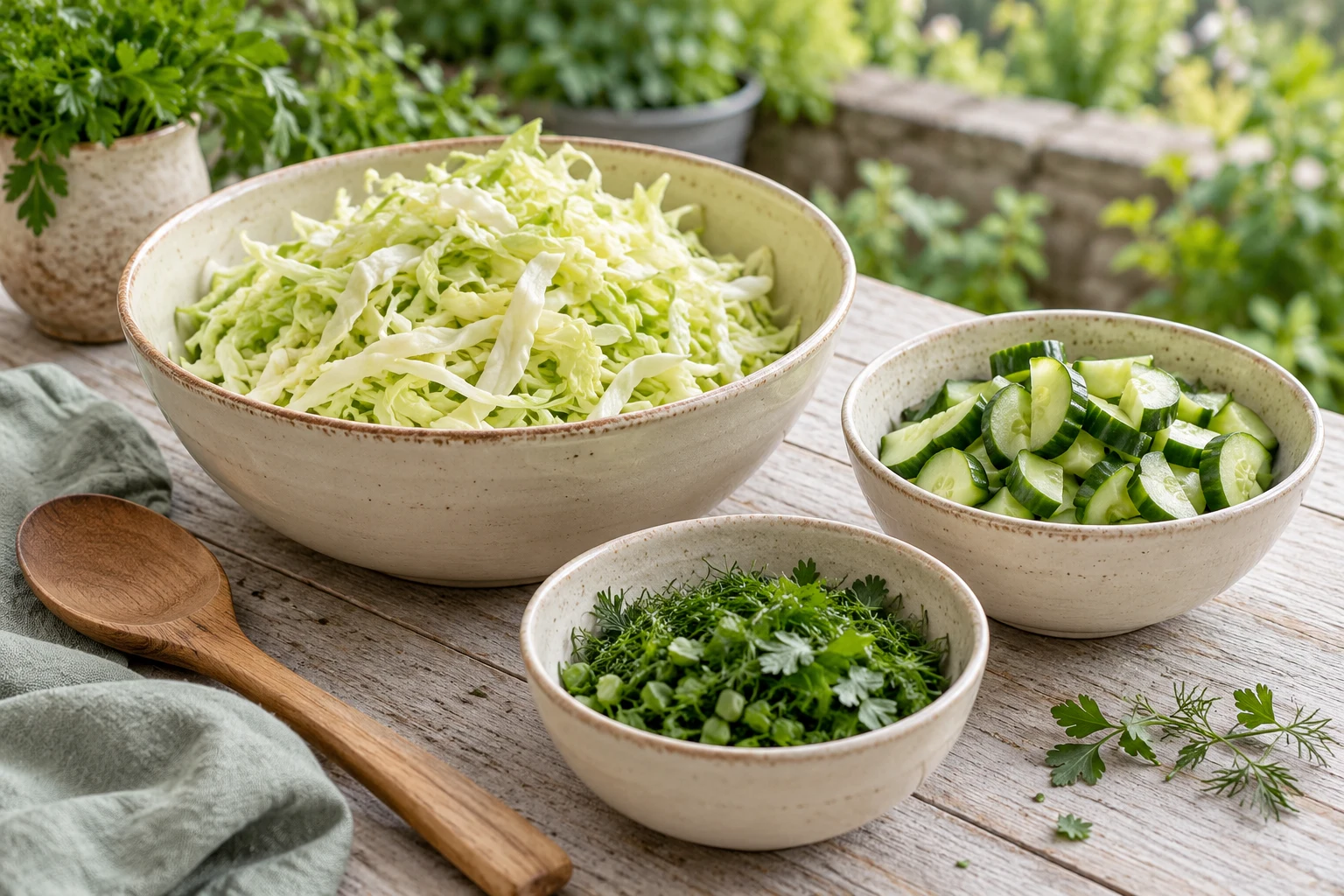
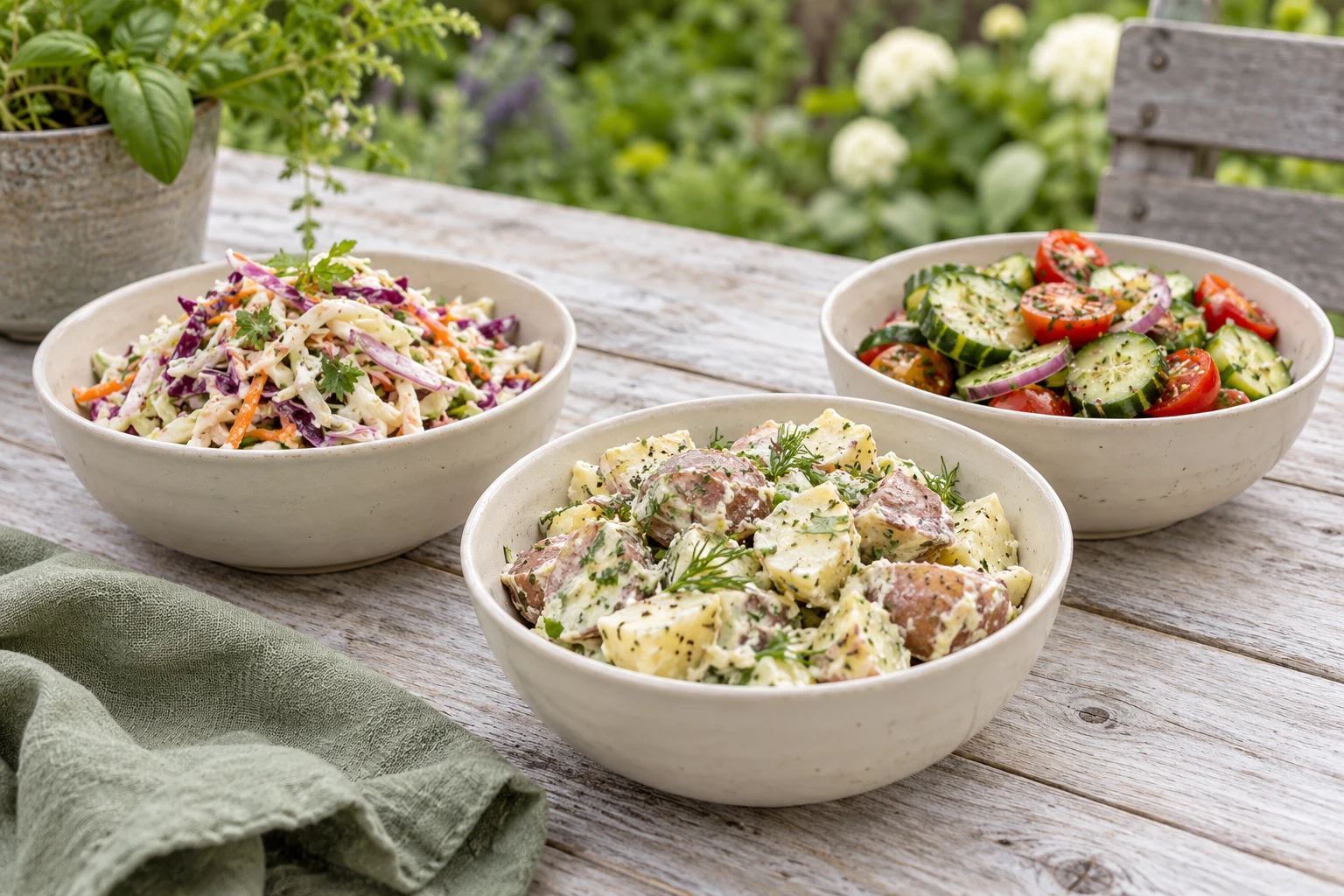
Use a simple structure: one filling side, one vegetable, one fresh or acidic element, and one sauce or condiment. Potatoes, beans, bread, rice, or corn provide substance. Slaw, cucumber, tomatoes, greens, or pickles provide contrast. A sauce can connect the plate without requiring another cooking project.
Make at least one side ahead
Make-ahead sides protect the fire plan. A bean salad, grain salad, slaw, or prepared dressing can be finished before the grill is hot. Prepare ingredients so final assembly takes minutes rather than requiring a cutting board beside raw meat. This gives the cook attention for the fire and prevents the table from waiting for one last complicated bowl.
Cold sides containing perishable ingredients need a cold holding plan. Keep them refrigerated until serving and return them to safe storage promptly. Do not leave a mayonnaise-based salad in direct sun while the meat cooks. Use smaller bowls and replenish them from a chilled container instead of exposing the whole batch for the afternoon.
Use the grill selectively
Not every side needs to be grilled. Bread, corn, onions, peppers, mushrooms, and sturdy vegetables can benefit from direct heat. Dense vegetables may need indirect time before a short finish. A cast-iron pan or grill basket can keep small pieces from falling through and makes it easier to move food away from a flare-up.
Avoid putting every side on at once. Group foods by cooking time and texture. Thick potatoes need a longer start; asparagus and bread need only a short finish. If the grate is crowded, food steams and the cook loses the ability to move one piece without disturbing another. Cook in waves and use the cooler zone as a holding or finishing area.
Keep flavour clear
A side should support the main rather than compete with it. Salt, acid, sweetness, smoke, and heat should be adjusted in small steps. A smoky main may need lemon, vinegar, herbs, or pickles rather than another smoky sauce. A rich side can be balanced by fresh vegetables. Serve strong sauces separately so guests can choose their intensity.
Dress salads close to serving when crispness matters. Add crunchy toppings at the table. If a vegetable has already been charred, avoid covering the flavour with a heavy glaze. A small amount of oil, salt, and acid can show more of the ingredient than a long ingredient list.
Plan the serving order
Long-cooked meat may need to rest while quick sides finish. Prepare the table and serving tools before the final grill stage. Keep cooked sides away from raw-food tools and use clean platters. If a side is best hot, cook it after the main has moved to a safe resting place rather than forcing everything to finish together.
Serve in modest portions and replenish. This keeps food at a better temperature and reduces waste. It also lets the cook see what guests are actually eating. A large platter left outside for hours is harder to keep safe than several smaller servings.
Match sides to the heat plan
Choose sides that fit the grill you have. A small kettle grill may handle corn and sliced vegetables in a basket, but it should not be overloaded with several thick trays. A gas grill can hold a low burner for warming and a hot burner for finishing. An outdoor oven or covered pan may be better for a long-baking side than using the main grate.
Write the order down: start the slow side, preheat the grill, cook the main, rest it, then finish the quick side. If the main needs the direct zone, do not reserve that space for bread too early. If a side can be served at room temperature, take it out of the fire schedule. This simple classification prevents the menu from becoming a traffic jam.
Avoid common menu problems
Three heavy, creamy sides can make a rich barbecue feel flat and difficult to finish. Three raw salads can leave the meal without warmth or substance. A menu with five grill-dependent dishes creates congestion and makes fire control harder. Remove one item before adding another when the plan becomes crowded.
If a side is bland, adjust at the end with acid, herbs, salt, or a sauce instead of adding more smoke. If it is soggy, improve draining, spacing, and dressing timing. If it burns, reduce direct exposure or move to indirect heat. If guests cannot identify the components, label sauces and unfamiliar ingredients.
Keep portions and leftovers safe
Use serving bowls that match the number of guests and replenish from protected containers. Keep utensils with the correct dish and replace any utensil that has touched raw food. When the meal is over, follow current USDA FSIS guidance for refrigerating leftovers rather than leaving food to cool indefinitely outdoors. The side-dish plan should include storage containers before cooking starts.
Review the table
After the meal, note which side was prepared early, which demanded the grill, what stayed fresh, and what was left over. Keep the strongest combination and simplify the next menu. A dependable barbecue table uses sides to create contrast, protect the schedule, and make the main taste better.
When a side fails, diagnose its job before changing the recipe. A watery salad may need better draining or later dressing, while a bland grilled vegetable may need acid after cooking rather than more salt before it. This keeps the menu flexible and prevents a heavy sauce from becoming the default fix for every problem.
Sources
- CDC Preventing Food Poisoning: https://www.cdc.gov/food-safety/prevention/index.html
- USDA FSIS Leftovers and Food Safety: https://www.fsis.usda.gov/food-safety/safe-food-handling-and-preparation/food-safety-basics/leftovers-and-food-safety
- FoodSafety.gov How to Grill Safely: https://www.foodsafety.gov/blog/how-grill-safely-summer